
5 Things to know about Lone-Actors and Counterterrorism
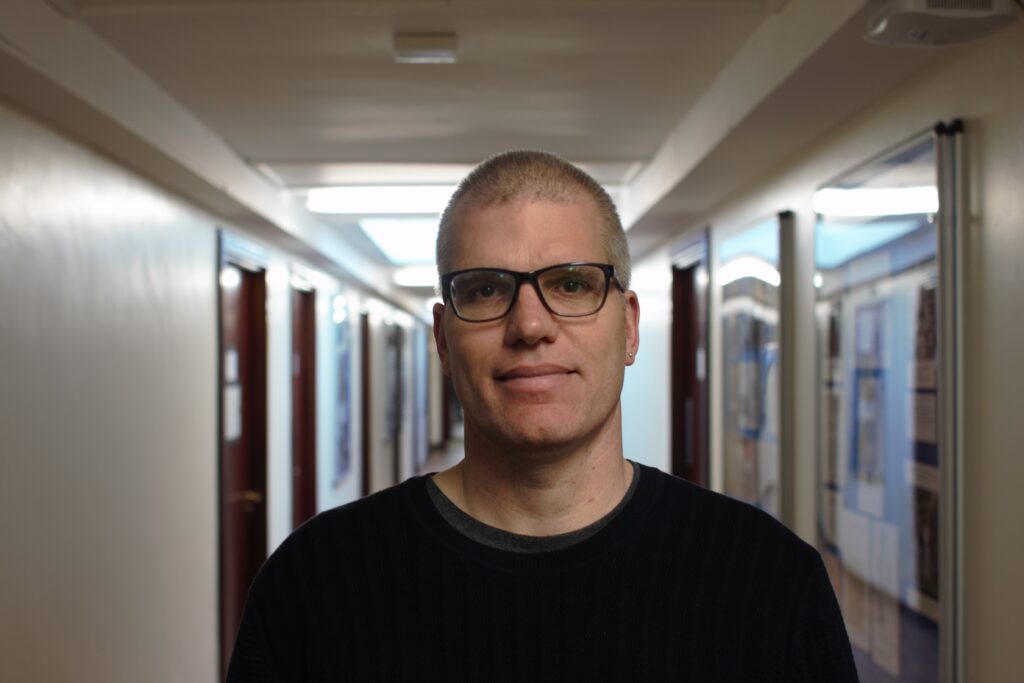
Host |Evan Kryski is the Deputy Executive Officer of Research with CASIS Vancouver. His research interests lie in exploring the intricacies and intersectionality of extremism and radicalization, soft violence, nuclear proliferation, deradicalization,hybrid warfare, and identity based conflict. With further work in the field of intelligence, he hopes to assist in the development of strategies to better analyze the multifaceted and ever changing nature of the Canadian security landscape.
5 Key Points:
- Dr. Hewitt emphasized that no single ethnic, religious, political or national group has a monopoly on this form of violence, and that policy makers must be cognizant of the social impacts of overzealous security policy targeted towards specific communities. Additionally, Dr. Hewitt noted that a historical perspective illustrates that lone actor terrorism is not a new phenomenon, but rather that it can trace its roots to as far back as instances of anarchist violence in the 19th century.
- Dr. Hewitt stated that gender is an often underreported variable where men represent a disproportionate amount of perpetrators of lone actor terrorism. He pointed out that many scholars have explored how differing social constructs of masculinity often relate to the emergence of terrorist violence.
- Lone actor terrorists are almost always motivated by a mixture of both personal and wider political grievances, though the exact balance between personal and political motivations varies from instance to instance, observed Dr. Hewitt.
- Lone actor terrorists are extremely difficult to prevent, as they often emerge from under the radar and often utilize improvised everyday weapons. However, Dr. Hewiit stated lone actor terrorists often have limited resources and tend to be poorer in terms of effectiveness and experience at committing violence.
- Dr. Hewitt identified a challenge faced by deradicalization programs: while there are a large number of potential perpetrators of lone actor terrorism, very few actually commit violent acts with no consistent pattern explaining why. He explained that therefore, deradicalization programs that are too broad in implementation will induce a large number of people who would not commit violent acts anyways.
Relevant Articles:
Hewitt, S. (2021). “One-man war”: a history of lone-actor terrorism in Canada, 1868- 2018. (pp. 1-68). Canadian Network for Research on Terrorism, Security and Society (TSAS).
Kimmel, M. (2019). Angry white men: American masculinity at the end of an Era. Bold Type Books.
Hillyard, P. (1993). Suspect community : people’s experiences of the prevention of terrorism acts in Britain. Pluto Press.
Gilmour, J. (2024). The Socialization Of Terrorism In Canada . The Journal of Intelligence, Conflict, and Warfare, 6(3), 32–77. https://doi.org/10.21810/jicw.v6i3.6327
Moskalenko, S., González, J. F.-G., Kates, N., & Morton, J. (2022). Incel Ideology, Radicalization and Mental Health: A Survey Study. The Journal of Intelligence, Conflict, and Warfare, 4(3), 1–29. https://doi.org/10.21810/jicw.v4i3.3817