Canadian Association for Security and Intelligence Studies Vancouver
AQ Episode 33
5 Things To Know About Money Laundering
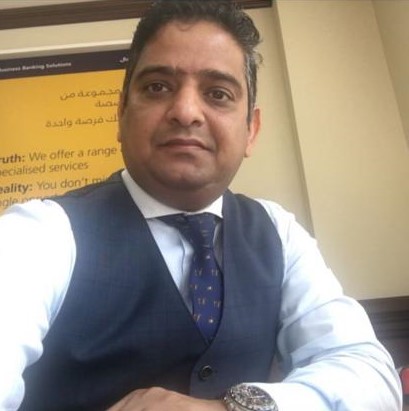
Guest | Shadab Ashraf. With over 20 years of expertise in corporate finance, business banking, and project and trade finance, Shadab brings a wealth of knowledge to the table. Throughout his illustrious career, he’s received awards such as the Best Banker Award 2014 from SMBRE (Dubai Government Entity) and has spearheaded initiatives resulting in multimillion AED revenue. As a Senior Relationship Manager at Emirates NBD, Dubai, Shadab has managed extensive portfolios, fostered strategic alliances, and driven business growth with an eye for innovation and market insight. Join us as we explore Shadab’s journey, professional insights, and the intricate landscape of financial management in today’s global markets.
Host | Maxwell Gardner is an Executive with CASIS-Vancouver with a diverse set of interests that converge into a creative research mind to cultivate innovation. With hands-on experience working on small scale volunteer projects abroad, over 5 years of experience as a carpenter on large projects in Canada, and a background in International Relations and Languages. Max’s research interests focus on International Development & Security in the Anthropocene and Translations Studies. Max hopes to assist in creating conversations between Canadian institutions, agencies, and the private sector that strengthen cooperation on transnational issues.
5 Key Points:
Mr. Ashraf describes how banking is continually evolving and so is money laundering in transaction means, technique complexity, and currencies. Digital banking and cryptocurrencies will continue to make money laundering and the nature of transactions more complex. Mr. Ashraf explained that money laundering using crypto currency happens in several ways including exchange hopping, the practice of using multiple crypto exchanges and transferring funds across platforms which makes it harder to trace, and smurfing which is when large amounts of money are split into smaller transactions. Additionally, crypto is at high risk of money laundering due in part to the lack of physical presence of the remitter or receiver.
According to Mr. Ashraf, there are several things that banks can do in order to prevent money laundering, including performing enhanced due diligence and strong KYC (Know Your Customer) on a continuous basis, identifying the remitter or original source of funds, and identifying the UBO or ultimate beneficial owner of the funds. These steps mitigate the majority of money laundering attempts.
The three main strategies of prevention identified by Mr. Ashraf are: 1. examining data and legacy systems in banking because improving data quality is the key to building robust anti-money laundering systems, 2. establishing a robust governance model enabling banks to identify the UBO and remitter with testing of models on a regular basis as money laundering techniques evolve, 3. and quick adaptation of systems in response to this evolution. A bank’s compliance department must be robust and the SWIFT system should be capable of adequately screening all incoming and outgoing transactions. Mr. Ashraf noted that commercial and Islamic banks both deal with the universal problems associated with money laundering and do not have differing strategies to combat it.
Banking in the United Arab Emirates is regulated by the Central Bank of UAE and there are many entrepreneurs and investors attracted to the UAE because of the banking quality and low taxes. The Central Bank of UAE has not licensed cryptocurrencies nor recognised them as legal tender to date, however, there are no prohibitions against owning it or trading it, explained Mr. Ashraf.
Mr. Ashraf describes the Islamic banking system, which is designed to comply with sharia law, as a lease-to-own system where banks make purchases based on customer demand and lease it to the customer over time for a fixed price, typically above market value. Critically, Islamic law prohibits gain from illegal activities and areas not permitted under Islamic law such as alcohol, arms trade, gambling, and pornography which helps stop illegal activities.
Relevant Articles:
Dupuis, D., & Gleason, K. (2021). Money Laundering With Cryptocurrency: Open Doors and the Regulatory Dialectic. Journal of Financial Crime, 28(1), 60–74. https://doi.org/10.1108/JFC-06-2020-0113\
Lacoursiere, M. (2022). Cryptocurrency and Money Laundering: The Canadian Perspective. Banking & Finance Law Review, 38, 355–363.
Mohammed, A. N. (2023). Presenting a Legal and Regulatory Analysis of the United Arab Emirates’ Past, Present and Future Legislation on Combating Money Laundering (ML) and Terrorist Financing (TF). Journal of Money Laundering Control, 26(2), 253-267. doi:https://doi.org/10.1108/JMLC-08-2017-0038
Teichmann, F. M. J., & Falker, M.-C. (2021). Money Laundering via Cryptocurrencies – Potential Solutions From Liechtenstein. Journal of Money Laundering Control, 24(1), 91–101. https://doi.org/10.1108/JMLC-04-2020-0041
Tung, G. (2021). Technology as a Tool for Transnational Organized Crime. The Journal of Intelligence, Conflict, and Warfare, 4(1), 112–121. https://doi.org/10.21810/jicw.v4i1.2820
Wronka, C. (2022). Money Laundering Through Cryptocurrencies – Analysis of the Phenomenon and Appropriate Prevention Measures. Journal of Money Laundering Control, 25(1), 79–94. https://doi.org/10.1108/JMLC-02-2021-0017