
By Eduardo Franco
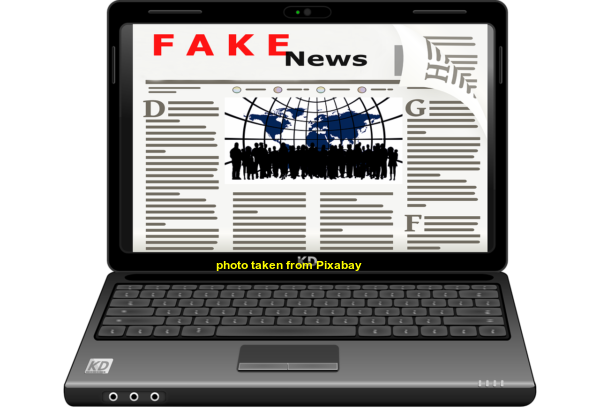
COVID-19 has caused millions of people to isolate themselves in their homes and time spent online has increased significantly. When people are not working, they are either being targeted with random COVID-19 pop-ups on social media or are actively searching for information about the disease. The problem is, not all available information is trustworthy.
Racist and xenophobic comments are spreading throughout social media, arguably stemming from fake news and misinformation; they also seem to have a specific agenda: to promote and incite hatred against ethnic, religious, and national groups, and even blame them for the outbreak. Global News has published an article reporting a letter that was issued by The York Region District School Board in Ontario that showed concerns of xenophobia and racism against Chinese people (Patel & Bowden, 2020, para. 9-10). The letter was issued after receiving an online petition from parents demanding Chinese students to be quarantined for 17 days if they had travelled to China. The Guardian has also published an article with testimonies of Asians being automatically treated as infected with the coronavirus, which raises security concerns for the Asian community in the UK (Phan, 2020). Additionally, as COVID-19 cases increase, more violent incidents against Asians are being reported in the news likely as a result of misinformation disseminated on the internet.
Governments and health authorities are requesting both social media users and platform owners to aid in preventing the dissemination of fake news and misinformation. The Independent reported that in the UK, digital secretary, Oliver Dowden, has urged social media platforms to take actions against fake news and misinformation (Dearden, 2020, para. 3-5). According to The Guardian, Facebook has announced new policies regarding misinformation; users who like, share, comment or react with an emoji to posts deemed likely to, “contribute to imminent physical harm,” will see a message in their newsfeed directing them to a page maintained by the World Health Organization (WHO) (Wong, 2020, para. 1-3). This sends an important message to social media users: before forwarding information regarding COVID-19, verify the veracity of them by cross checking them with what is being conveyed through official means, that is, government and health authorities’ reports. Ultimately, social media users are just as responsible as the people who run these platforms for enabling the spread of hate online.
Sources:
Dearden, L. (2020, March 27). Coronavirus: Government issues disinformation warning as extremists and conspiracy theorists exploit crisis. The Independent. Retrieved from: https://www.independent.co.uk/news/uk/home-news/coronavirus-conspiracy-theory-warning-disinformation-uk-government-a9429101.html
Patel A., & Bowden O. (2020, January 28). ‘A lot of fear’: Asian community a target of racism amid coronavirus threat. Global News. Retrieved from: https://globalnews.ca/news/6467500/coronavirus-racism/
Phan, S. (2020, January 16). The coronavirus panic is turning the UK into a hostile environment for east Asians. The Guardian. Retrieved from: https://www.theguardian.com/commentisfree/2020/jan/27/coronavirus-panic-uk-hostile-environment-east-asians
Wong, J. C. (2020, April 16). Coronavirus: Facebook will start warning users who engaged with ‘harmful’ misinformation. The Guardian. Retrieved from: https://www.theguardian.com/technology/2020/apr/16/coronavirus-facebook-misinformation-warning
Disclaimer: Insights (including any that may have been created by executives or employees of CASIS, CCIBC, or AQ-IQ) are those of the authors and do not necessarily represent the opinions, beliefs or viewpoints of CASIS, CCIBC, or AQ-IQ.